
Will New Windows Stop Condensation?
Locate the moisture before choosing a repair or replacement. Condensation inside, outside and between panes needs different checks, and glazing cannot fix every cause of damp.
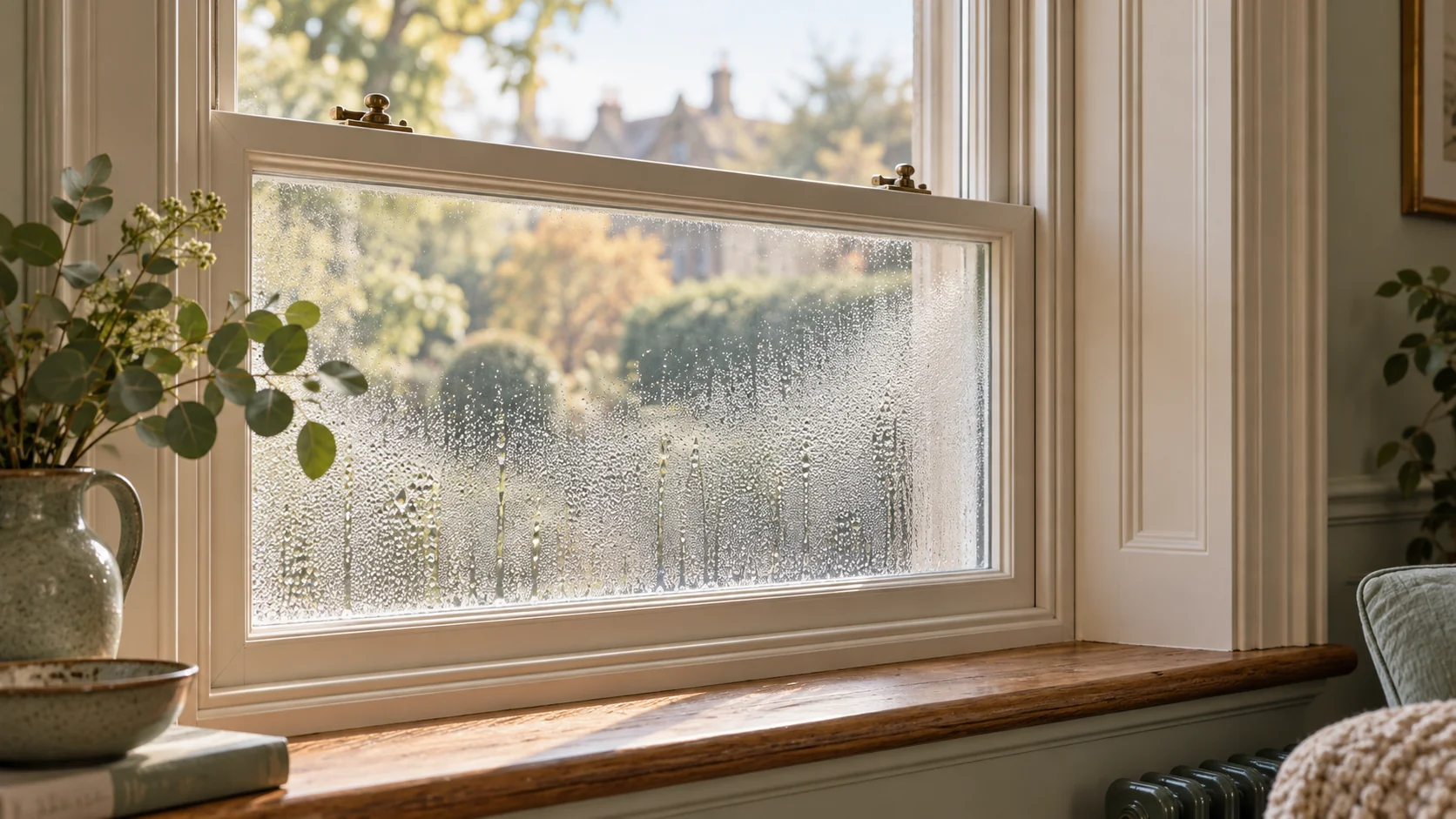
New windows may reduce condensation on the room-facing glass, but they do not guarantee a dry window or solve every moisture problem in a home. Before replacing anything, establish where the condensation is forming.
The right next step may be a glazing upgrade, a replacement sealed unit, a ventilation review or an investigation of another building defect.
Condensation on the Inside Surface
Water can form when moist indoor air meets a sufficiently cold surface. Better insulating glazing can keep the inner surface warmer under comparable conditions, reducing the likelihood of condensation there.
The outcome still depends on humidity, ventilation, heating and conditions around the window. Do not expect a guaranteed temperature increase or promise that droplets will disappear completely.
Moisture Between the Panes
Persistent misting trapped within a sealed glass unit commonly indicates a seal problem. If it cannot be wiped from either accessible face, have the unit inspected.
A sound timber frame may allow a glass-unit replacement without replacing the whole window. Check the glazing detail, drainage and timber condition before deciding what can be retained.
Condensation on the Outside
External dew can occur on highly insulating glazing in suitable weather conditions. By itself it does not prove that a sealed unit has failed, and replacing an otherwise sound window may not prevent it.
Read our guide to condensation on the outside of windows for the distinction between external dew and trapped misting.
What a Window Upgrade Cannot Fix on Its Own
A glazing change does not repair a leaking roof, resolve every cold bridge or remove moisture entering elsewhere. Water near a window may also involve rain penetration, drainage or installation defects; appearance alone does not establish the cause.
If there are recurring damp patches or mould on walls and ceilings, investigate the wider building conditions rather than assuming the glass is responsible.
Why Ventilation Must Be Considered
New windows and effective draught seals can reduce uncontrolled air leakage. That makes a ventilation assessment important. Do not rely on old gaps as the ventilation design, or simply block existing vents.
Review the intended background ventilation and extract arrangements alongside the window work. Opening windows for occasional airing performs a different role from a planned ventilation system. Use the applicable requirements for the dwelling and proposed work.
Repair, Glass Upgrade or Replacement?
If the timber is serviceable, discuss repair and a compatible glazing upgrade. If an existing sealed unit has failed, ask whether only that unit needs replacement. Where significant timber damage or unsuitable construction prevents a practical repair, a replacement window may be appropriate.
Draught-proofing can improve comfort, but it is not a guaranteed cure for condensation. It should be considered with the ventilation provision.
For listed buildings and homes with additional planning controls, establish the requirements before changing historic glass or joinery.
What to Record Before a Survey
- Which face of the glass is wet, and whether it can be wiped clear.
- Photographs of the glass, frame, reveal and any wall patches.
- When the moisture occurs and whether it clears during the day.
- Existing vents, extractor fans and recent building changes.
- The window type, visible damage and property location.
Discuss the Appropriate Next Step
Tell AMB Joinery what you are seeing before choosing a specification. Explore sash window repair and restoration or glazing upgrades. A wider damp or ventilation issue may require advice beyond the window work.

