
Bespoke Joinery Services in London
When London homeowners want joinery london builders and restorers actually stand behind, they tend to arrive at the same answer: timber, made to measure, by people who understand buildings. AMB Joinery designs, manufactures and installs bespoke timber joinery across every borough of Greater London. We are not a merchant with a brochure of standard sizes. Every window, door, staircase and piece of fitted furniture we produce is drawn to your property's specific dimensions and character, then built in our own workshop and fitted by our own team. If you have been searching for a joiner who treats your home with the same care you do, you have found them.


What Is Bespoke Joinery?
Bespoke joinery means that nothing is taken off a shelf. Unlike off-the-shelf products — which are manufactured to standard sizes and profiles, then adapted to fit the opening — bespoke joinery is designed from scratch around your exact requirements.
In practical terms this matters enormously in London, where most housing stock is Victorian, Georgian or Edwardian. A standard replacement window will rarely sit flush with an original reveal, match an existing glazing bar profile or replicate the subtle mouldings on an original architrave. Bespoke joinery does all of this, because it is drawn to your building rather than your building being made to fit the product.
Timber is the natural material for this kind of work. It is dimensionally flexible, machineable to very fine tolerances, repairable rather than replacement-only and — when properly finished and maintained — genuinely long-lived. A well-built timber window will outlast several generations of uPVC equivalents. It also carries the kind of warmth and character that period London properties deserve.
Our London Joinery Services
We cover the full range of internal and external joinery. Each service is designed, manufactured and installed in-house.
Sash Windows
Sliding sash windows built to traditional proportions, with draught-sealed meeting rails and your choice of finish. Suited to Victorian and Edwardian properties where the original character of the elevation must be preserved.
Box Sash Windows
The definitive sash window for Georgian townhouses. Double-hung, weight-and-pulley operated, with slim sight lines and authentic profiles. We can accommodate slim double-glazed units within the box frame where planning rules allow.
Casment Windows
Traditional and contemporary timber casement windows, side-hung or top-hung, fitted with draught seals and modern hardware to suit period and new-build properties alike.
Fitted Furniture
Alcove units, built-in wardrobes, window seats, boot rooms and home offices. Designed to your wall, ceiling and floor, not approximated with filler strips. Available in a range of timber species and paint finishes.
Bespoke Doors
External and internal timber doors made to your required dimensions, glazing pattern and ironmongery specification. We manufacture both single and double sets, including door frames, architraves and any associated joinery.
Double Glazing Upgrades
Secondary glazing and slim double-glazed units that improve thermal performance without changing a window's character.
The AMB Joinery Process
Initial Consultation
We visit your property for a free, no-obligation survey. We measure every opening, photograph the existing joinery, assess the structural condition of frames or surrounding fabric and discuss your brief, timeline and budget in full.
Design & Specification
Within a few working days of the survey, you receive a written proposal with detailed drawings, a timber species recommendation and an itemised quote. We are transparent about lead times and costs at this stage — no surprises later.
Workshop Manufacturing
Once you approve the design and quote, your joinery enters our production schedule. Every component is manufactured in our London workshop. We do not outsource cutting or assembly to third parties. You can request updates at any point during manufacture.
Installation & Handover
Our installation team attends site on the agreed date, fits all elements to the approved drawings and carries out a thorough clean-up. For windows and doors, your FENSA certificate is issued automatically on completion. We walk through the finished work with you before leaving.
Why Timber Joinery?
Longevity
A correctly manufactured and maintained timber window or door will typically last fifty years or more. In many London conservation areas, the original timber joinery in Victorian properties is still in serviceable condition after 130 years.
Repairability
Unlike uPVC or aluminium, timber can be repaired rather than replaced. A sash that drops, a mortise that loosens, a section of sill that decays — all of these can be addressed without replacing the whole window. This matters for the lifetime cost of ownership and for the embodied carbon in your home.
Aesthetics
Timber has a warmth and depth that no other material replicates. It can be profiled to any historic section, painted to any colour, stained to show its grain or oiled for a natural finish. It suits period and contemporary properties equally.
Planning Authority Acceptance
In conservation areas and for listed buildings, timber joinery is almost universally accepted by local planning authorities, while uPVC is frequently refused. If you are in a conservation area — and a significant proportion of inner London's housing stock is — timber is often not just preferable but required.
Sustainability
Timber is the only major building material that is actively renewable. We source our timber from responsibly managed forests (FSC and PEFC certified suppliers), and the longevity of the finished joinery means fewer replacements over a building's lifetime.
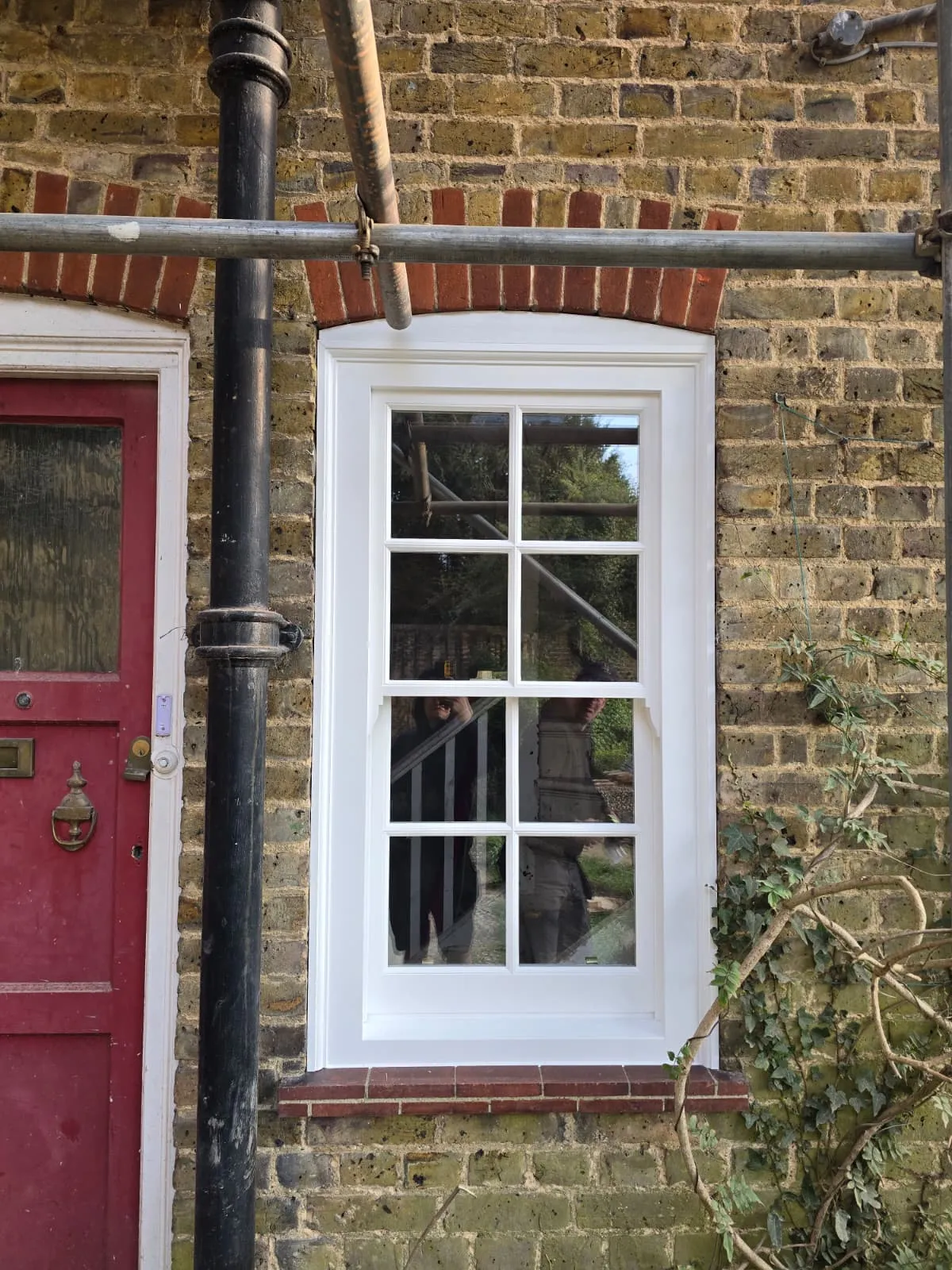

London Case Study: Victorian Terrace, Hackney
A client in Hackney approached us with a mid-terrace Victorian property on a residential street in a locally listed conservation area. The original single-glazed box sash windows had been replaced at some point in the 1980s with sub-standard softwood units that had since deteriorated beyond repair — swollen sashes, failed putty glazing and significant draughts.
The planning requirement was for like-for-like replacement in timber, matching the existing glazing bar arrangement and meeting rail profiles visible on neighbouring properties. We surveyed all six window openings, produced scale drawings and submitted a supporting specification to the planning officer, who confirmed the work was compliant under permitted development.
All six box sash windows were manufactured to the original six-over-six glazing arrangement with 28mm glazing bars and a lamb's tongue moulding detail. We installed slim 4-6-4mm double-glazed units within the sash frames to improve thermal performance. Existing window boards and interior architraves were retained and matched where any new section was needed. The full programme from survey to completion ran to six weeks. The client's energy bills dropped noticeably the following winter, and the property has since been sold — the new timber windows were cited by the buyer's surveyor as a positive feature.
Frequently Asked Questions
Where do you work in London?
We cover all London boroughs within the Greater London boundary. We work in inner London boroughs including Hammersmith & Fulham, Kensington & Chelsea, Westminster, Wandsworth and Fulham, as well as outer London areas such as Hillingdon, Ealing, Hounslow, Harrow, Richmond and beyond.
How much does bespoke joinery cost?
Cost depends on the scope, timber species, glazing specification and finish. A single replacement box sash window typically starts from around £1,700 supply and fit. Bespoke timber doors start from £2,200 supply and fit. We provide a fully itemised written quote after the free survey — there is never a vague estimate.
How long does it take?
Most projects run four to eight weeks from survey to installation, depending on workshop load and project complexity. This includes replacement windows, bespoke doors and fitted furniture commissions. We confirm the lead time in writing as part of your quote.
Can you match existing joinery?
Yes. Matching existing profiles, mouldings, glazing bar arrangements and timber species is a core part of what we do, particularly in period properties where consistency across a building or terrace matters. Bring photographs to the survey if you can — it helps us plan the specification precisely.
Do you handle planning permissions?
We provide full technical drawings and written specifications that you can submit with a planning application. For works that fall within permitted development (which most like-for-like timber replacements do), we confirm compliance in writing as part of the FENSA certification process. We do not act as a planning consultant, but we have a strong track record of producing documentation that conservation officers accept without revision.
Start Your Project
Every project begins with a free site survey — no charge, no obligation, no sales pressure. Book your survey or contact our team to discuss your requirements before you commit to anything.

