
Timber Sash Windows
in London
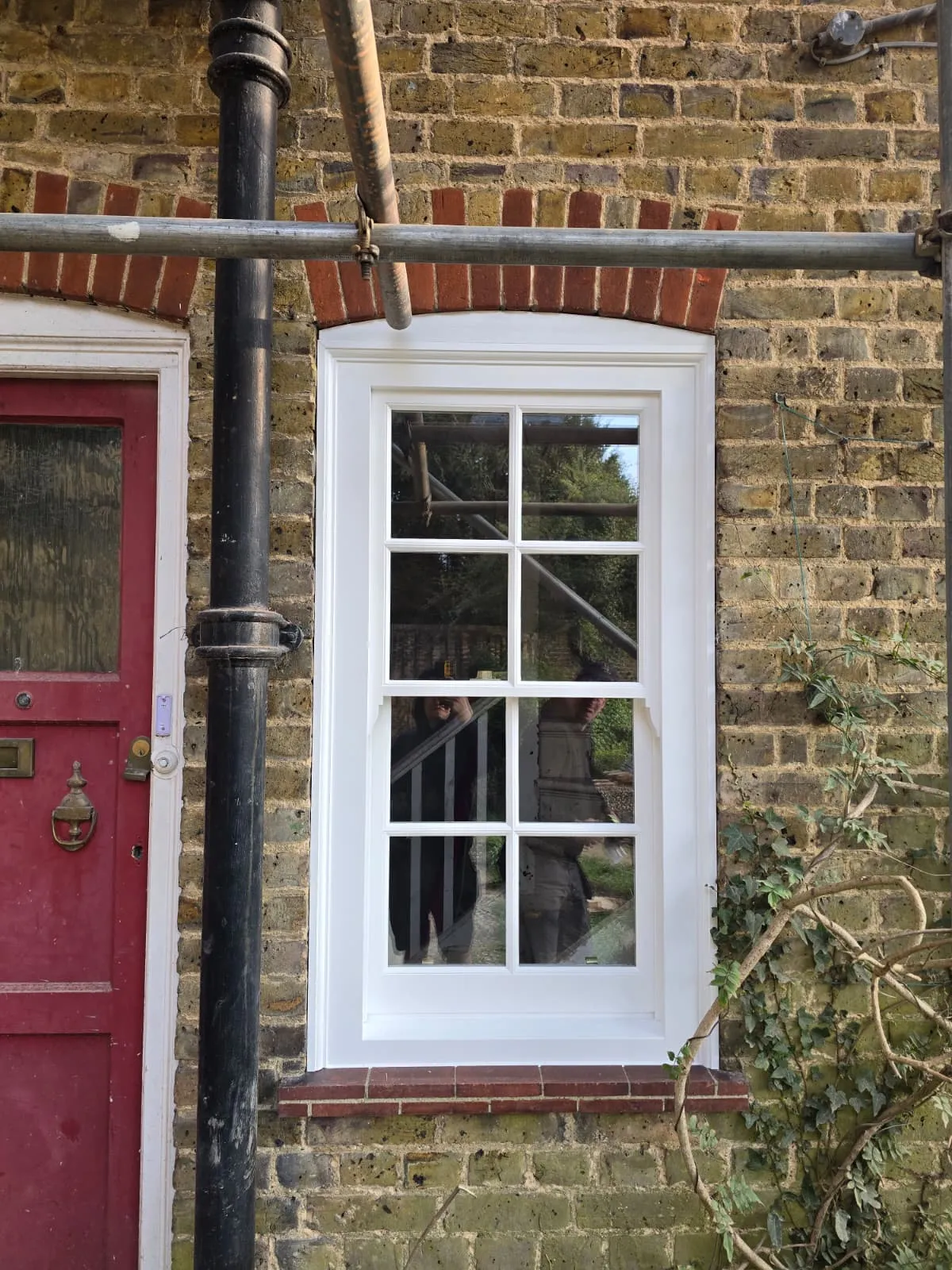
AMB Joinery has been supplying and installing bespoke sash windows across London for homeowners who want quality that matches their property. Whether you live in a Victorian terrace in Hackney, an Edwardian semi in Richmond or a Georgian townhouse in Islington, our sash windows London service delivers custom timber windows designed and manufactured specifically for your home. Every window is made to measure in our workshop, fitted by our own installation team and backed by a 10-year guarantee. From a single replacement sash to a whole-house refurbishment, we handle the project from free survey through to FENSA certification.


What Are Sash Windows?
A sash window is a vertically sliding window made up of two panels — the upper sash and the lower sash — that move past each other within a single frame. The name comes from the word "chassis", reflecting the framed panel that holds the glass. The vertical sliding mechanism is the defining feature, and it is precisely this detail that gives London's period streets their characteristic appearance.
Sash windows became the dominant window type in London from the late 17th century onwards, first in Georgian townhouses where their elegant proportions suited the symmetrical façades of the era, then through the Victorian and Edwardian periods as the design was refined and mass-produced for the terraced housing that defines so much of inner London.
Read More
Homeowners choose sash windows for reasons that go beyond heritage compliance. The top-opening ventilation they provide draws warm air out of a room naturally. The slim sightlines of a well-made timber sash frame let in considerably more light than a modern casement window. And aesthetically, nothing replicates the look of a timber sash in a period property — not uPVC, not aluminium, not composite.
The term "sash window" is sometimes used to describe both box sash windows and simpler spring-balanced sash windows. A box sash window has a hollow cased frame that conceals counterbalance weights on cords or chains, giving a deeper frame profile and the most authentic traditional appearance. A spring-balanced sash uses a concealed coil spring mechanism in place of weights, allowing a slimmer frame. AMB manufactures both types; the right choice depends on your property and whether you are replacing like-for-like or specifying new windows. See our timber sash windows page for a full breakdown of materials and construction options.

Sash Window Options
Single-Pane Sash Windows
Single-pane glazing is the traditional specification for a sash window and remains the right choice in many situations. For listed buildings and properties in conservation areas, single glazing keeps sight lines as slim as possible and avoids the subtle but visible edge bead that a sealed unit requires. Some conservation officers and local authorities insist on single glazing where original windows survive, so it is worth checking with your local planning department before specifying.
Single-pane sash windows are not simply a compromise. Combined with effective draught-proofing (see below), a well-made single-glazed timber sash window can perform far better than a draughty, rattling original. Timber is also a naturally better insulator than aluminium, and the thermal mass of the frame itself contributes to the overall performance of the window.
AMB can manufacture single-pane sash windows to any size, any glazing bar configuration and any profile, matching the details of existing windows or historic drawings.
Double-Glazed Sash Windows
Modern slim sealed units have transformed what is possible within a traditional timber sash frame. AMB fits double-glazed units as thin as 12 mm total thickness, which allows double glazing to be incorporated without noticeably altering the sight lines of the window or requiring oversized rebates that would look out of place on a period home.
The performance benefits are significant. A double-glazed sash window will reduce heat loss, cut down on condensation and noticeably lower external noise compared with single glazing. For most London homeowners replacing old, draughty sash windows, double glazing is the default recommendation.
We offer three glazing specifications:
- Standard double glazing — a 4-4 or 4-6-4 unit with a warm-edge spacer bar; suitable for most domestic applications
- Acoustic glazing — asymmetric glass thicknesses (e.g. 6.4 mm laminated outer pane) that attenuate sound more effectively; ideal for properties on busy roads or near railway lines
- Vacuum glazing (Fineo) — a next-generation unit just 6 mm thick with a vacuum between the panes; thermal performance comparable to triple glazing in a unit slim enough for conservation area use
Speak to us about which glazing option suits your property. Our double glazing upgrade service is also available for existing timber sash frames in good structural condition.
Draught-Proofed Sash Windows
Draught-proofing is often the most cost-effective intervention for sash windows that are structurally sound but thermally poor. Original sash windows lose heat primarily through air infiltration — gaps between the meeting rail, the parting bead and the outer sash — rather than through the glass itself.
AMB installs pile seals and brush seals as part of our restoration service. Pile seals compress to fill the gap between the sash and the frame as the window closes, and they do not impede the vertical sliding action. Brush seals perform a similar role at the meeting rail. The result is a window that slides smoothly, seals effectively and no longer rattles in the wind.
Draught-proofing is routinely included when we carry out sash window repair and restoration work and can be added to existing windows without full replacement.
Why Replace Your Sash Windows with AMB?
Custom made to your original dimensions
We do not work from catalogue sizes. Every window is measured on site, drawn up for your approval and manufactured in our workshop to your exact aperture. This matters particularly in older London properties where no two openings are the same size.
Matches your period details exactly
We can replicate any moulding profile — ovolo, ogee, lamb's tongue — and any glazing bar arrangement. Bring us a photograph, a fragment of original timber or your local authority's design guidance and we will match it.
Double glazing within a traditional frame
You do not have to choose between authentic appearance and modern thermal performance. Our slim sealed units sit within traditional timber profiles, giving you the look of a period sash window with significantly improved insulation and noise reduction.
FENSA registered and fully certified
All replacement window installations are carried out under our FENSA registration, meaning your installation is certified as compliant with Building Regulations. You will receive a FENSA certificate on completion, which is important for property sales and mortgage purposes.
The Installation Process
Free survey
One of our surveyors visits your property to measure every opening, assess the existing frames and discuss your requirements. There is no charge for the survey and no obligation.
Design approval
We produce drawings showing the window dimensions, glazing bar layout, moulding profiles and glazing specification. You approve these before manufacture begins.
Manufacturing
Your windows are made in our London workshop. Lead time is typically 8–12 weeks from survey to delivery, depending on specification and order volume.
Removal and fitting
Our installation team removes the existing windows, prepares the reveals and installs your new sash windows. Any making-good to plaster, render or external masonry is discussed at survey stage.
FENSA certificate
Within 30 days of completion we register your installation with FENSA and issue your certificate. This confirms that your new windows comply with Part L of the Building Regulations.
Sash Windows in London's Period Properties
London has a higher concentration of period housing stock than almost any other city in the UK. Victorian terraces, Edwardian semis and Georgian townhouses make up a significant proportion of the capital's residential properties, and sash windows are integral to the character of all three building types.
If you live in a conservation area, replacing your windows requires more care than a standard domestic project. Many London boroughs have introduced Article 4 Directions that remove permitted development rights for window replacement, meaning that even like-for-like replacements may require householder planning permission. The rules vary borough by borough — what is acceptable in one area may be refused in another.
Read More
As a general principle, conservation officers favour timber sash windows over uPVC or aluminium alternatives. Like-for-like replacement in timber, matching the existing profile, glazing bar arrangement and finish, is usually viewed positively. Introducing double glazing into a conservation area may require you to demonstrate that the visual impact on the street scene is minimal — which is precisely the case with our slim sealed units.
AMB works with homeowners across all London boroughs and can advise on the planning position for your specific property. We are familiar with the design guidance published by the major London conservation authorities and can help you prepare supporting information if a planning application is needed.
For listed buildings, consent from your local planning authority is always required before replacing windows. We recommend contacting your heritage officer at an early stage and can provide supporting technical information about our materials and methods.
For further information on sash window replacement, visit our services page.


Frequently Asked Questions
How much do new sash windows cost in London?
The cost of new sash windows depends on size, glazing specification, timber species and the number of windows. A single standard double-glazed timber sash window typically starts from around £1,200–£1,800 supplied and fitted, with prices rising for larger windows, more complex glazing bar arrangements or premium glazing such as acoustic or Fineo vacuum units. We provide fixed-price quotes after a free survey, with no hidden charges.
Can sash windows be double glazed?
Yes. Modern slim sealed units can be fitted within traditional timber sash frames without significantly altering the external appearance of the window. AMB uses units as thin as 12 mm total thickness, which keeps sight lines close to those of a single-glazed window. For conservation areas or listed buildings, we can specify Fineo vacuum glazing at just 6 mm thick, which is often acceptable where standard double glazing is not.
Are sash windows suitable for conservation areas?
Timber sash windows are generally the preferred specification in conservation areas and are far more likely to be acceptable to conservation officers than uPVC or aluminium alternatives. Many London boroughs operate Article 4 Directions that require planning permission for window replacement even on unlisted buildings, so it is important to check the position with your local authority before ordering. AMB can advise on the planning requirements for your property.
How long do timber sash windows last?
A well-maintained timber sash window can last 50–100 years or more. The original sash windows in many Victorian and Edwardian properties are still in place and functioning after more than a century. The key to longevity is regular decoration — checking and refreshing the paint finish every 5–7 years prevents moisture ingress and rot. AMB windows are factory primed and can be supplied with full undercoat and top coat applied before delivery.
Can you repair rather than replace my sash windows?
Yes. If the existing frames and sashes are structurally sound, repair is often the better and more economical option. We offer a full sash window repair and restoration service that includes replacing rotten sections with new timber, re-cording weights, installing draught-proofing and redecorating. We will advise honestly at the survey stage whether repair or replacement makes more sense for your windows.
How long does sash window installation take?
On a typical project, installation takes one to two days per window or per elevation, depending on access and the complexity of the work. The lead time from initial survey to installation is 8–12 weeks. We aim to cause as little disruption as possible and will discuss programme with you before work starts.
Ready to Replace Your Sash Windows?
AMB Joinery offers a free, no-obligation survey for all sash window projects across London. Our surveyor will measure your windows, discuss your requirements and provide a fixed-price quotation. We are FENSA registered and back every installation with a 10-year guarantee.

