
Box Sash Windows
Box sash windows are the authentic window type for London's period housing stock, and the majority of surviving original windows in Georgian, Victorian and Edwardian properties across the capital are of box sash construction. AMB Joinery manufactures bespoke box sash windows in our London workshop, made to measure for each individual opening, with counterbalance weight systems, traditional moulding profiles and glazing options tailored to your property. If you are replacing failed windows or upgrading the performance of ageing originals, our box sash windows deliver the correct appearance and the correct construction — not an approximation of it.
Every window we supply is designed and manufactured in-house, fitted by our own installation team and registered with FENSA on completion. We offer a free survey across all London boroughs and back every installation with a 10-year guarantee.


What Is a Box Sash Window?
A box sash window takes its name from the hollow cased frame — the "box" — that forms the outer structure of the window. Inside each vertical side of this frame, known as the pulley stile, is a cavity that houses a cast iron counterbalance weight. The weight is connected to the sash by a waxed cotton cord or stainless steel chain that runs over a brass or cast iron pulley wheel set into the top of the stile. When the lower sash is raised, the weight descends within the cavity; when the sash is lowered, the weight rises. The result is a window that can be held open at any position without a stay, latch or prop.
This counterbalance mechanism is the defining feature of the box sash window and the reason it dominated British domestic architecture for more than two centuries. It is a simple, repairable and highly effective system that requires no springs, no hydraulics and no electricity. When a cord eventually wears and breaks — typically after 20–30 years of use — replacing it is a straightforward joinery task that does not require the window to be removed from the frame.
Read More
The upper and lower sashes slide in channels formed by the parting bead (which separates the two sashes) and the staff bead (which holds the lower sash into the frame). The meeting rail — the horizontal rail where the two sashes meet when both are closed — is usually given a slightly angled profile so that the two rails form a weathertight seal when the window is shut.
Box sash windows remain the standard window type in period London homes precisely because the construction is so well suited to the building fabric. The deep cased frame integrates naturally into a solid masonry wall, the sashes can be fully opened for ventilation without projecting into the room or the street, and the whole assembly can be repaired indefinitely by someone with basic joinery skills.
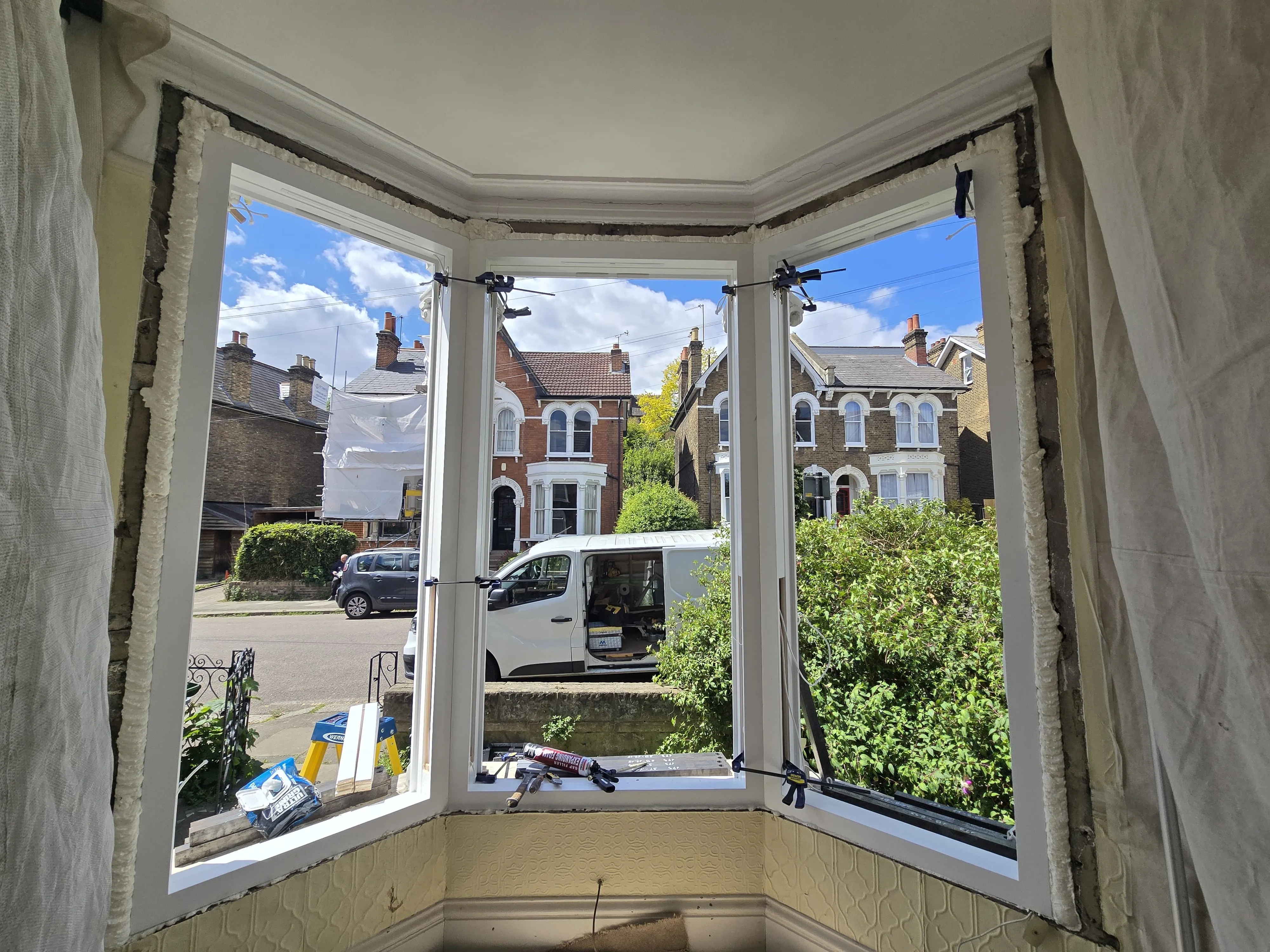

Box Sash vs Standard Sash
Not all sliding sash windows are box sash windows, and the distinction matters when you are replacing windows in a period property.
A box sash window has a hollow cased frame that conceals counterbalance weights. The frame is typically 90–120 mm deep from face to back, reflecting the depth needed to house the weight cavity. This deeper frame integrates naturally into the reveals of a solid brick wall, which is usually 215–330 mm thick in Victorian and Georgian construction.
A standard spring-balanced sash window uses a concealed coil spring mechanism in place of weights. The spring is housed within the sash stile rather than in a separate frame cavity, which allows a significantly slimmer frame profile — sometimes as little as 55–70 mm deep. Spring-balanced sash windows are easier and cheaper to manufacture, but they are not the authentic construction for period London properties.
Read More
From the street, a well-made spring-balanced sash and a box sash look broadly similar. The differences are in the frame depth, the operating character of the window and the long-term repairability. Box sash windows are the right choice for:
- Georgian, Victorian and Edwardian properties where the original windows were of box sash construction
- Conservation areas and listed buildings where authenticity of construction method is assessed
- Any property where like-for-like replacement is a planning condition
- Homeowners who want the most repairable and longest-lasting window mechanism available
Spring-balanced sash windows can be appropriate for modern extensions, new build properties or applications where the shallower frame depth is a practical necessity. AMB manufactures both; we will advise on the appropriate type at the survey stage.
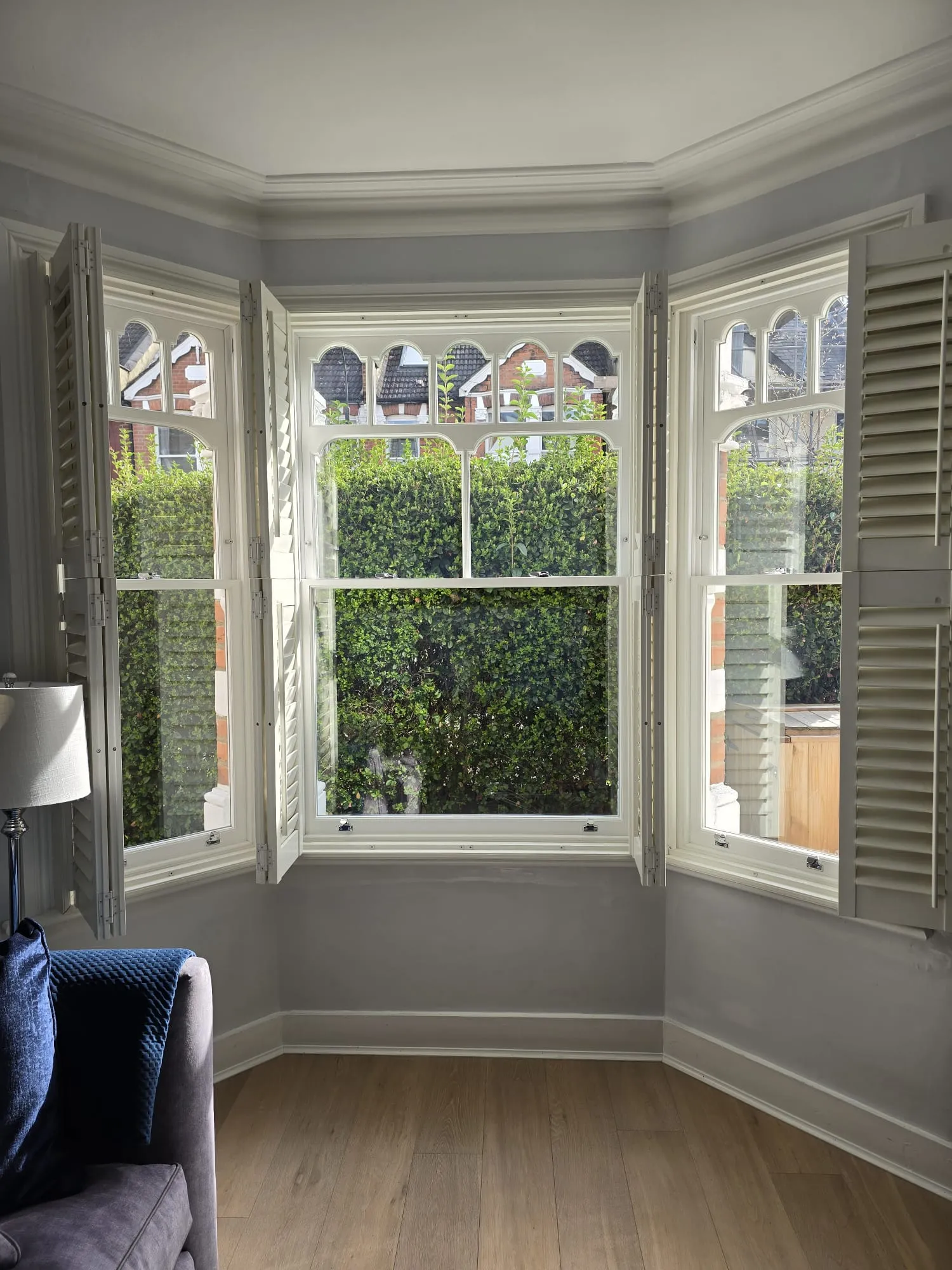
AMB Box Sash Window Features
Timber Cased Frames
The cased frame is the structural heart of a box sash window. AMB manufactures frames from the same timber species used for the sashes — Accoya or European redwood as standard, with hardwood options available — ensuring consistent movement characteristics across the whole window assembly. The frame depth is specified to match the original window or to suit the depth of the reveal in your wall, and the face width of the outer frame is matched to the existing window or to your local authority's design requirements.
The pulley stiles are machined to accept standard 38 mm cast iron face pulleys. The internal cavity is sized to accommodate the appropriate weight for the sash — which becomes particularly important when specifying double-glazed sashes, which are considerably heavier than single-glazed equivalents and require correspondingly heavier counterbalance weights. We calculate the correct weight specification for every window we manufacture.
Counterbalance Weights
AMB specifies cast iron counterbalance weights as standard. Cast iron has been used for this purpose since the 18th century and remains the best material: it is dense, corrosion-resistant in the sheltered cavity environment and available in a wide range of sizes. Each weight is specified to within a few grams of the ideal counterbalance for the sash it serves, ensuring smooth, effortless operation.
The weights are connected to the sashes using waxed cotton sash cord (traditional and correct for the majority of period properties) or stainless steel chain (more resistant to wear and easier to replace; appropriate where double-glazed sashes impose higher loads on the cord). The cord runs over a brass or cast iron pulley wheel set flush into the top of the pulley stile. Replacement cords can be fitted without removing the window from the building; access is gained by removing the staff bead and drawing the lower sash forward. This is one of the most straightforward maintenance tasks in joinery.
Glazing Bars and Profiles
The glazing bars — the slim horizontal and vertical timber members that divide the glass within each sash — are one of the most visible details of any sash window, and getting the profile right is essential in a period property.
AMB produces glazing bars in three primary profiles:
- Ovolo — a quarter-round moulding with a small step; the most common profile in Victorian sash windows and still the appropriate choice for the majority of London period properties
- Ogee — an S-curve with a flat; found in finer Victorian and some Georgian windows; gives a slightly more elaborate appearance
- Lamb's tongue — a flat face with a small cove at the bottom; common in late Georgian and Regency work; more restrained than ovolo
We can also produce bar moulding (a flat glazing bar with chamfered edges) and any bespoke profile given sufficient reference information — a surviving original glazing bar, a measured drawing or a specification from your conservation officer.
Standard glazing bar configurations include 2-over-2 (common in mid-to-late Victorian work), 6-over-6 (Georgian and early Victorian), 8-over-12 and any other arrangement required by your property or planning authority.
Double Glazing in Box Sash Frames
The most common objection to double glazing in box sash windows is that the sealed units are too thick to fit within the slim rebates of a traditional frame without altering the appearance of the window. AMB addresses this with slim sealed units from 12 mm total thickness, which sit within rebates that are only marginally deeper than those required for single glazing.
The weight of double-glazed units is greater than single-glazed equivalents, and the counterbalance weights must be specified accordingly — a calculation we carry out for every window we manufacture. Properly specified, a double-glazed box sash window operates as smoothly as a single-glazed one.
For conservation areas and listed buildings, we can specify Fineo vacuum glazing at just 6 mm total thickness — a unit that delivers thermal performance equivalent to triple glazing in a profile that is effectively indistinguishable from single glazing. This is the most planning-sympathetic double-glazing option available and is accepted in many London conservation areas where standard double glazing would not be appropriate. See our double glazing upgrade service for full details.


Period Property Applications
Box sash windows are found across London's period housing stock, from the grand Georgian townhouses of Mayfair and Bloomsbury to the modest Victorian terraces of Hackney, Lewisham and Tooting. The window type spans more than two centuries of London's residential development and is integral to the character of virtually every conservation area in the capital.
For homeowners in conservation areas, replacing sash windows requires careful attention to the local authority's design requirements. Many London boroughs — including Islington, Hackney, Southwark, Wandsworth, Hammersmith and Fulham, and the Royal Borough of Kensington and Chelsea — operate Article 4 Directions that remove permitted development rights for window replacement. Under an Article 4 Direction, even like-for-like replacement in timber requires householder planning permission.
Read More
The planning position varies by borough, by conservation area and sometimes by street. The general principle is that timber box sash windows in an authentic construction, matching the profile, glazing bar arrangement and colour of the original windows, are viewed positively by conservation officers. Introducing double glazing may require you to demonstrate that the visual impact on the character of the conservation area is minimal — which is precisely what our slim sealed units and Fineo vacuum glazing are designed to achieve.
AMB is experienced in working with homeowners across all London boroughs. We are familiar with the design guidance issued by the major London conservation authorities and can advise on the planning position for your specific property. Where a planning application is required, we can provide technical drawings, material specifications and supporting information. Visit our sash window replacement service page for more on the full process.
For properties in conservation areas requiring restoration rather than replacement, our sash window repair and restoration service is often a planning-acceptable alternative to full replacement.
Frequently Asked Questions
What is the difference between a box sash and a sliding sash window?
A sliding sash window is the general term for any window where the sashes slide vertically past each other. A box sash window is a specific type of sliding sash where the frame is hollow — "boxed" — to house counterbalance weights connected to the sashes by cords running over pulleys. This weight-and-cord mechanism is the traditional and most authentic construction for period London properties. Other sliding sash windows use spring balance mechanisms in place of weights, giving a slimmer but less authentic frame profile. AMB manufactures both types; we recommend box sash construction for Georgian, Victorian and Edwardian properties.
Can box sash windows be double glazed?
Yes. AMB fits slim sealed units from 12 mm total thickness into box sash frames, maintaining the slim sight lines of a traditional window while delivering the thermal and acoustic benefits of double glazing. The counterbalance weights are specified to account for the greater weight of the double-glazed unit. For conservation areas and listed buildings where standard double glazing may not be acceptable to the planning authority, we can specify Fineo vacuum glazing at just 6 mm thick — a unit that is effectively visually indistinguishable from single glazing while providing excellent thermal performance.
How long do box sash windows last?
Box sash windows made from quality timber and properly finished can last 50–100 years or more. Many original box sash windows in London properties are more than 100 years old and still operational. The mechanism is simple and fully repairable: cords can be replaced, pulleys refurbished, weights re-specified and individual sections of timber spliced when localised decay occurs. Longevity depends primarily on maintaining the paint finish to prevent moisture ingress, and on prompt attention to any areas where the finish fails.
Can you repair the cords and weights in my existing box sash windows?
Yes. Re-cording is one of the most common sash window repairs and can be carried out without removing the window from the frame. We remove the staff bead and the lower sash, access the weight pocket through the pocket piece in the pulley stile, and replace the cord or chain. The same visit is used to check the condition of the weights and pulleys and to install draught-proofing if required. See our sash window repair and restoration service for details.
How much do bespoke box sash windows cost?
The cost depends on the size of the window, the timber species, the glazing specification and the complexity of the glazing bar arrangement. A single standard double-glazed timber box sash window typically starts from around £1,700 supplied and fitted, with prices varying for larger windows, premium timber species such as Accoya, acoustic or vacuum glazing, or intricate glazing bar configurations. We provide fixed-price quotations after a free survey — there are no hidden charges and no obligation.
Get a Quote for Box Sash Windows
AMB Joinery provides a free, no-obligation survey for box sash window projects across all London boroughs. Our surveyor will visit your property, assess your existing windows, measure every opening and discuss the options available for your property. We are FENSA registered and back every installation with a 10-year guarantee.
Get a Free Quote — or explore our full range of sash windows in London and timber sash windows.

