
Cottage Windows in London
Cottage windows — small-pane timber casements with glazing bars, leaded lights or traditional multi-light configurations — are among the most architecturally sensitive windows to replace in London. They define the character of Arts and Crafts estates, Edwardian cottage terraces and pre-Victorian properties across the city, and getting them wrong in a conservation area is not a minor matter. AMB Joinery manufactures bespoke cottage windows to match any original configuration, from simple four-pane casements to complex leaded light patterns.


What Are Cottage Windows?
"Cottage windows" is a broad term that covers several related styles, all characterised by smaller individual panes divided by glazing bars or lead came rather than a single large sheet of glass. The most common types found in London properties are:
Small-pane casements with timber glazing bars
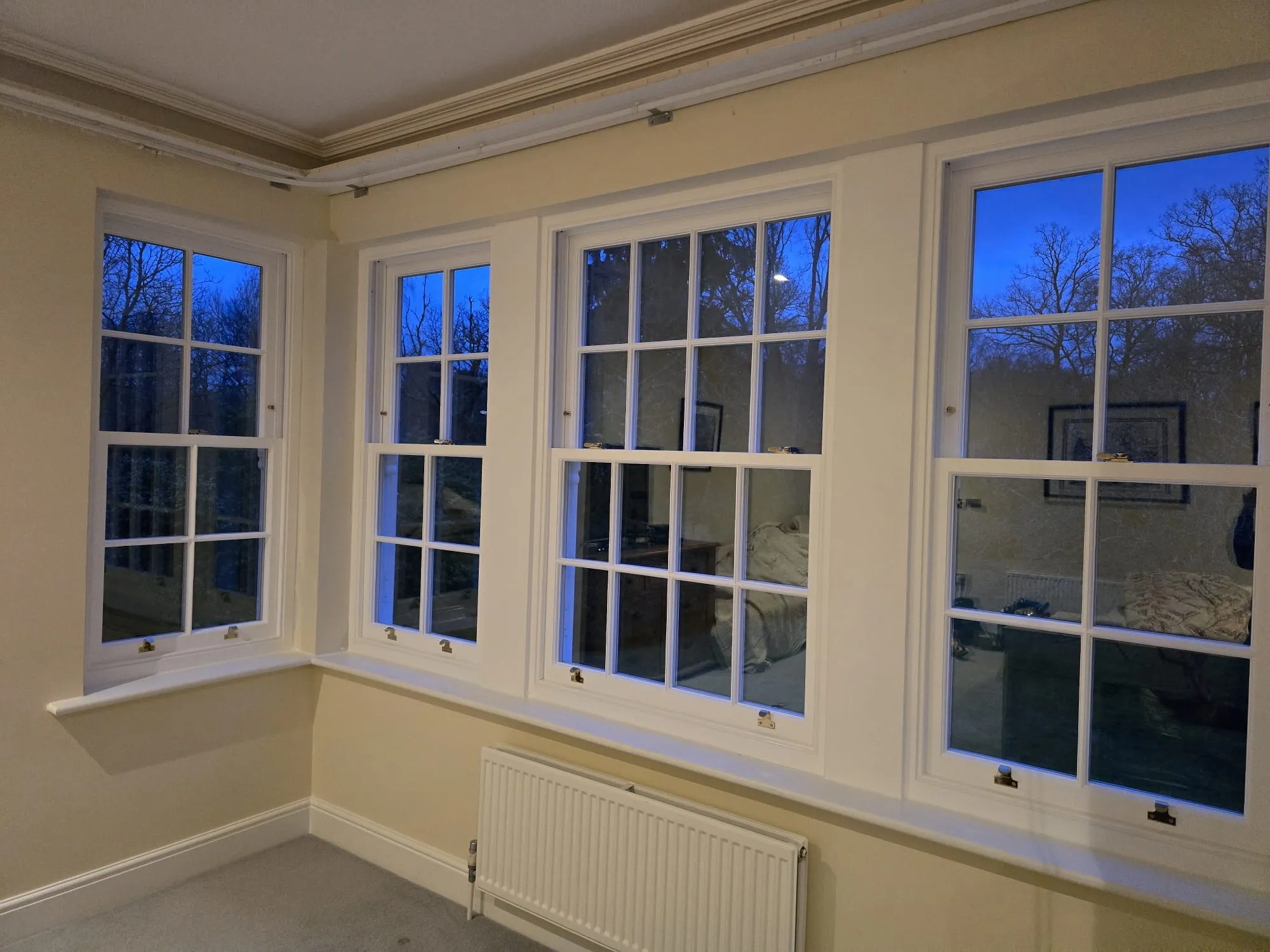
The most prevalent cottage window type. A casement sash divided into multiple panes by horizontal and vertical glazing bars. Common configurations include 2-over-2, 4-pane, 6-pane and 8-pane. The bars are typically slim — 20–28mm face width depending on the period and style — and moulded with an ovolo or lamb's tongue profile.
Leaded lights
Individual glass panes set in lead came rather than timber glazing bars. Diamond, rectangular and square patterns are all common. Leaded lights appear in Arts and Crafts properties, Edwardian cottages and some Tudor-revival terraces.
Georgian bar configurations
A specific small-pane arrangement characteristic of Georgian-influenced domestic architecture: 6-over-6, 8-over-12, and other symmetrical divisions. Often associated with early Victorian and late Georgian townhouses in outer London.

Why Profile Matching Matters
In a terrace or estate where every property has the same cottage windows, replacing a single window badly stands out immediately. The issues are almost always in the details: a glazing bar that is 4mm too wide; an ovolo profile replaced with a flat bar; a diamond leaded light pattern that does not match the adjacent window.
AMB Joinery can replicate any existing glazing bar profile from a physical sample taken from the existing windows. We carry tooling for the most common London period profiles and can manufacture bespoke cutters where an unusual profile requires it. For leaded lights, we work with specialist lead suppliers and can match existing came widths and patterns from measurements or photographs.
When all windows in a property are being replaced, we work from the surviving originals or from historic photographs where the property is documented.
Glazing Options
Glazing specification for cottage windows involves an additional consideration: the glazing bars must be visible from outside, and a sealed unit sitting behind them looks different from a single pane. This matters most in conservation areas and listed buildings.
Single pane glass
The traditional solution; no visible edge to the unit, no cavity depth change, and where the planning authority requires like-for-like, often the only acceptable option. Available in modern float glass (clear) and horticultural glass (with slight natural surface variation, for authentic period appearance).
Slim sealed units
Modern slim double-glazed units can be fitted behind the glazing bars with the bars proud of the face, maintaining the external appearance. Total unit thickness typically 6–8mm. Performance is meaningfully better than single glazing. Suitable for many conservation areas where Fineo would be excessive.
Fineo vacuum glazing
At 6.7mm total thickness and with a very thin profile, Fineo units are the best solution when full double-glazing performance is required in a listed or conservation area context. The lack of an obvious cavity makes the glazing bar shadow appear natural.
Leaded lights with double glazing
Sealed units can be manufactured with an internal leaded light panel laminated to the glass, preserving the external appearance while adding thermal performance. This is accepted by many local authorities in conservation areas.

Conservation Areas and Listed Buildings
Cottage windows appear most frequently in the most planning-sensitive contexts: Arts and Crafts estates, garden suburb developments and rural-style cottage terraces that are extensively covered by Article 4 Directions across London.
In boroughs such as Camden, Islington, Hackney, Richmond and Kingston, replacing cottage windows requires a planning application in most streets. The planning authority will typically require like-for-like replacement — same casement type, same glazing bar configuration, same profile dimensions, same finish colour. Proposing a different window type (such as sliding sash) where cottage casements are original would not normally be approved.
For listed buildings, Listed Building Consent is required for any alteration to the windows, regardless of how minor. We assist with the consent application, provide detailed drawings and specifications, and can attend pre-application meetings with conservation officers where required.
We establish the planning position for every property during the survey. We will tell you exactly what is required before any manufacturing commitment is made.
When to Repair Rather Than Replace
In conservation areas and listed buildings, repair is frequently the preferred option — and sometimes the required one. If your cottage windows are structurally sound but draught, rattle or have isolated rot, restoration and repair is almost always the better choice: less expensive, less disruptive, and more likely to receive planning approval where consent is required.
We will give you an honest assessment at survey stage. If repair is viable, we will tell you, and we will not recommend replacement where it is not necessary.
Frequently Asked Questions
Can leaded lights be double glazed?
Yes, in most cases. The most common approach is a sealed unit with an internal leaded light panel laminated to the inner face of the glass. From the outside, the appearance is essentially identical to a traditional leaded light; from inside, the cavity is visible at close range. This solution is accepted by many conservation officers. Where it is not accepted, Fineo vacuum glazing behind a traditional external lead came is an alternative.
How do you match existing glazing bar profiles?
We take a physical sample from the existing windows — typically a section of staff bead or glazing bar — and machine-match it. We hold tooling for most common London period profiles. For unusual profiles, we manufacture a bespoke cutter. The result is visually indistinguishable from the original.
Do I need planning permission to replace cottage windows?
In most cases where your street has an Article 4 Direction — which is very common in London conservation areas where cottage-style properties are concentrated — yes, you will need a planning application. For properties outside conservation areas, replacement is usually permitted development. We will confirm the position for your specific address during the survey.
What timber should cottage windows be made from?
For most exposed positions, Accoya is the correct specification — its dimensional stability is particularly important for small-pane windows where glazing bar movement can crack panes. European redwood is a cost-effective alternative for sheltered positions with a good maintenance regime.
Get a Free Survey
Request a free survey to discuss your cottage windows. We will visit, measure every opening, establish the planning position and provide a written quote with profile drawings for your approval. For properties where repair may be viable, see our sash window and casement repair service. For information on the casement window type more broadly, see our timber casement windows page.

