
Why Is There Condensation on the Outside of My Windows?
Learn why outside condensation forms, how to locate moisture safely, and when misting may call for a closer inspection rather than a new window.
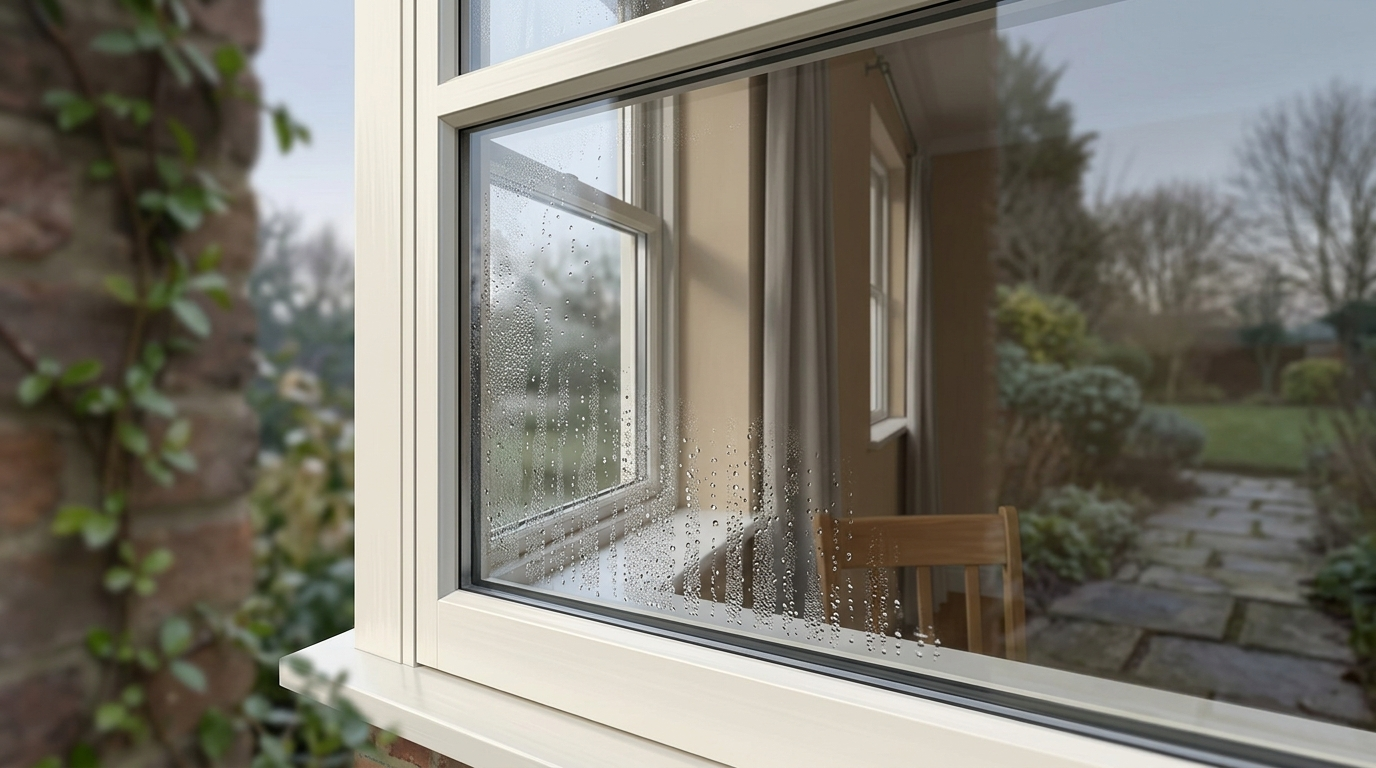
Condensation on the outside of a window forms when the outer glass surface becomes cold enough for moisture in the outdoor air to condense on it. This can happen on well-insulated glazing, particularly on cool, still mornings. External droplets alone are not a reason to replace a window, but first establish which surface is wet.
The location matters: moisture outside, on the room-side surface and between the panes points to different conditions. This guide explains how to distinguish them and when further assessment is useful.
Why Does the Outside Glass Become Wet?
Insulating glazing limits heat transfer from the room, so less indoor warmth reaches the outer pane. On a clear night, that surface can also lose heat by radiation towards the sky. If its temperature falls below the dew point of the surrounding air, water droplets can form.
Humidity, wind, shading and the direction a window faces all affect the result. One pane may be wet while another nearby remains clear. External condensation can be consistent with good insulation, but it is not a measurement of the window’s U-value or proof that every component is in good condition.
Pilkington’s explanation of external condensation describes the effects of insulation, weather and surroundings. The moisture often clears as conditions change; there is no fixed time by which every window should be dry.
Outside, Inside or Between the Panes?
On the outside surface
You may see droplets or a light mist on the weather-facing glass. Where that surface is safely accessible, the moisture can be wiped away. If it appears under suitable weather conditions and then clears, it is usually ordinary external condensation.
On the room-side surface
Moisture that wipes from the glass inside the room is surface condensation. It depends on indoor moisture levels and the temperature of the surface. Ventilation, heating, moisture sources and cold areas around the window can all contribute, so it should not automatically be attributed to one cause.
Between the panes
Moisture within a sealed glazing cavity cannot be wiped from either exposed surface. It can indicate deterioration of the sealed unit and should be assessed. Its appearance may vary with conditions rather than remaining permanently visible. A persistent mark could also be a deposit or another surface issue, so a photograph alone may not establish the cause.
How to Check Without Taking Risks
- Start by checking the room-side glass with a clean cloth where it is accessible.
- Only check the outside surface from a safe position. Do not lean out, climb onto a sill or remove a sash to carry out this test.
- Record when the mist appears and whether it clears as the weather changes.
- Take photographs of the whole window and the affected area if the location is uncertain.
A rainbow reflection or streak by itself does not identify a failed seal. If you cannot safely reach the outer surface, leave that part of the inspection to someone equipped to do it.
What Should You Do About External Condensation?
If the moisture is on the outside and no other problem is present, usually allow it to clear naturally. Follow the manufacturer’s cleaning instructions and avoid applying unapproved treatments to coated glass.
Specialist anti-condensation glass products do exist. For example, Pilkington describes coated glass intended to reduce external condensation. This does not mean an existing window needs replacing, or that a household spray provides the same function. Product availability and suitability need checking for a particular project.
What If the Moisture Is Between the Panes?
If assessment confirms failure of a sealed unit, replacement of that unit may be possible while retaining sound surrounding joinery. The condition of the frame, the glazing arrangement and the installation details determine the appropriate work.
A broken cord, stiff sash or local timber defect does not by itself justify replacing the whole window. Compare repair, glass replacement and a complete new assembly on the basis of an inspection.
For timber sash windows, our glazing upgrade information explains the assessment route. Where more extensive replacement is being considered, see sash window replacement.
What If the Moisture Is Inside the Room?
Reduce avoidable moisture and use the ventilation provided for the room. Follow the operating guidance for extract fans and vents, particularly when cooking, bathing or drying laundry. Do not seal ventilation openings in an attempt to make the window warmer.
If condensation persists, or there is damp damage around the opening, investigate the wider cause rather than assuming new glass will solve it. A building or ventilation assessment may be more useful than window replacement alone.
Will New Windows Stop Outside Condensation?
Not necessarily. A replacement with good insulation can still develop external condensation under the right weather conditions. Decide whether work is needed from the overall condition and performance of the window, not the presence of morning dew alone.
If you are unsure where moisture is forming in your timber windows, send AMB Joinery photographs and a description of when it appears. Include your postcode and any other symptoms so we can discuss the next step.

