
What Is Joinery?
Understand the different types of joinery, the materials and details to specify, and what to prepare before commissioning work for your home.
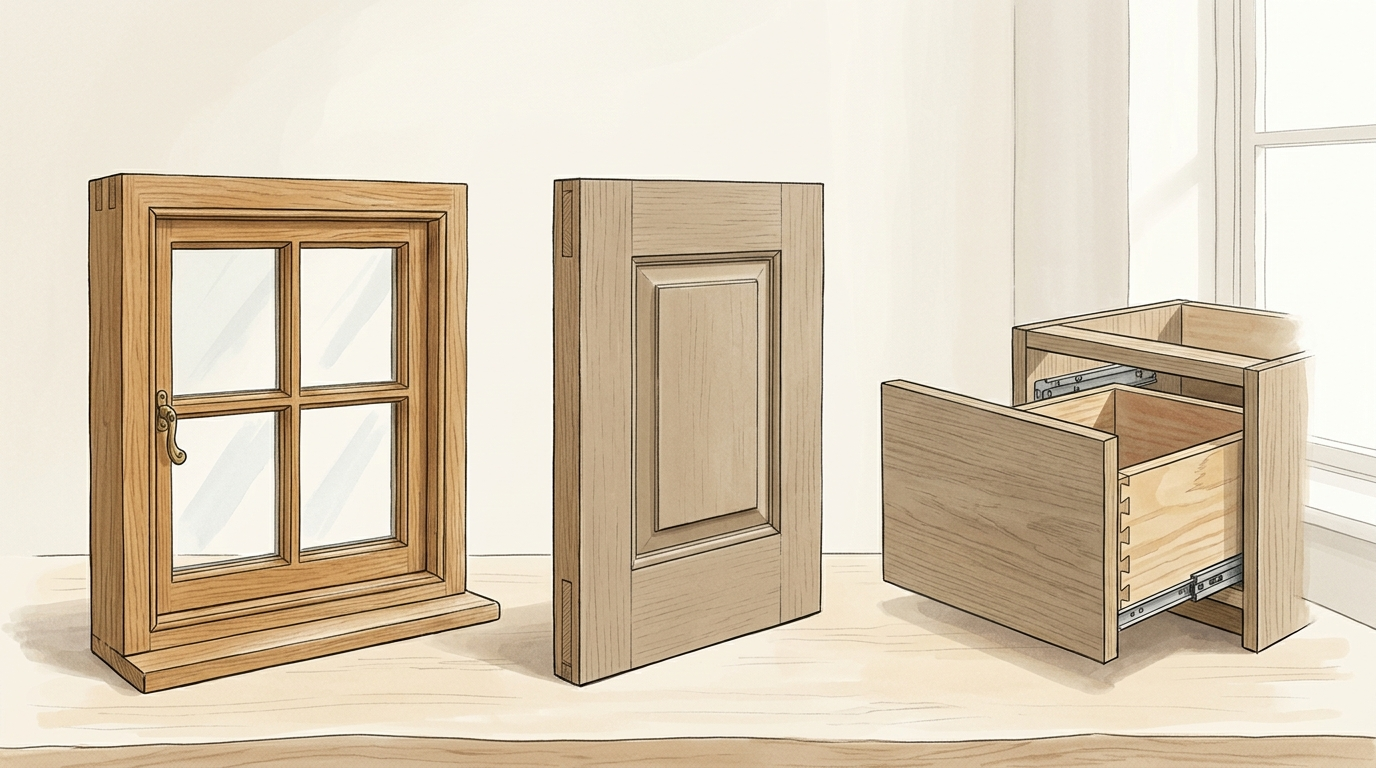
Joinery is the craft of making and assembling timber components, and the term also describes the finished work. In a home, it can include windows, doors, fitted cupboards and decorative details such as architraves and panelling. The materials may combine solid timber with engineered or veneered boards, depending on the item and its use.
This guide explains what you might commission and how to describe it. If you are choosing a tradesperson rather than defining the work, read what a joiner does and how to choose one.
Joinery, Carpentry and Bespoke Work
Joinery often involves making components in a workshop and then fitting them on site. Carpentry includes timber work carried out in the building itself. The trades overlap, and a company may provide both. The practical issue is who designs, makes, measures and installs your particular item.
Bespoke joinery is developed for an agreed brief rather than simply selected as a finished standard item. The degree of customisation varies: dimensions, layout, profiles, materials and finishes may all be adjustable. Ask what can change and what belongs to a standard system.
Made-to-measure work can help with awkward openings or a particular design, but it is not automatically necessary in every older home. Compare suitable standard products, repair and bespoke manufacture before deciding.
Types of Joinery Work for Homes
Timber windows
Window joinery may include frames, opening sashes, mouldings and glazing bars. A quotation should explain whether it covers new sashes in a retained frame, a complete window, or repair of existing components. Glass, seals, hardware and finishing also need to be defined.
For a period window, useful details include the opening dimensions, existing profiles and the condition of the original timber. Do not assume that replacing the entire assembly is necessary because one component has failed. Our timber window range is a starting point for comparing constructions.
External and internal doors
A door leaf is the moving panel; a complete door set includes the related frame and specified components. These are different scopes of work. For external doors, discuss the threshold, weather seals, glazing and locking arrangement. For internal doors, consider the existing lining, opening direction, finish and hardware.
Ask whether removal, installation and making good are included. Any required performance, such as a fire rating, must relate to an appropriate specified assembly rather than an assumption about the timber alone. See our door options.
Fitted furniture
Wardrobes, alcove cupboards, shelving and other fitted pieces are planned around the room and the items you need to store. A good brief covers internal layout as well as appearance: hanging space, shelf positions, drawer access and nearby sockets can all affect the design.
Specify carcasses, fronts and internal components separately. Solid timber, plywood, MDF, veneered and other furniture boards have different uses and finishes. A bespoke label does not guarantee one particular material or level of hardware. Explore bespoke furniture for this type of project.
Architectural details
Architraves, skirting, window boards and panelling help define the appearance of a room. Matching an existing detail starts with an accurate record of its shape and dimensions. A sample or approved drawing can help establish what is achievable before manufacture.
The wider trade also includes specialist work such as staircase manufacture. This overview is not a list of every service offered by AMB; confirm availability for work outside our current window, door and furniture services.
Materials, Finish and Maintenance
Start with the environment and use. An external window faces different exposure from an internal cabinet. The specification should identify the material, construction, coating system and expected care, rather than using “quality timber” as the only description.
Timber can often be repaired and refinished, but service life depends on design, exposure and maintenance. Other window materials can also allow replacement of individual seals, hardware or glazing components. Avoid choosing between products on the basis of a blanket claim that one material is always repairable and another never is.
If sourcing matters to you, ask for documentation relevant to the timber supplied. Environmental comparisons should consider manufacture, maintenance and end-of-life handling. Do not assume that painted, treated or bonded wood can be composted.
How to Specify a Joinery Project
- Describe the result. Explain what needs to work better: storage, opening, appearance, access or the condition of an existing item.
- Provide photographs. Include the whole opening or room and close-ups of details to retain or match.
- Give approximate dimensions. Only measure where safely accessible. State that these are preliminary and agree who verifies manufacturing sizes.
- Record constraints. Note sockets, pipes, uneven surfaces, access and other building work that could affect fitting.
- Explain preferences. Include finish, layout, glazing priorities and reference images without assuming every product is available.
- Share budget and timing. These help establish a realistic scope. Ask when any quoted lead time begins and what approvals it depends on.
What Should the Written Proposal Include?
Look for an agreed drawing or schedule, specified materials and finishes, the extent of installation, exclusions, payment terms and a process for design changes. Confirm who arranges associated work, such as decorating or moving services.
For windows in a listed building or conservation area, establish whether permissions are needed before changing details. The rules depend on the property and the work; see Planning Portal’s guidance on windows and doors. Any Building Regulations certification should also match the actual scope.
For timber windows, doors or fitted furniture in London, explore AMB Joinery’s services or send us your project brief.

