
What Is a Joiner?
A practical guide to what a joiner does, how the role overlaps with carpentry, and the questions to ask before choosing a specialist for your home.
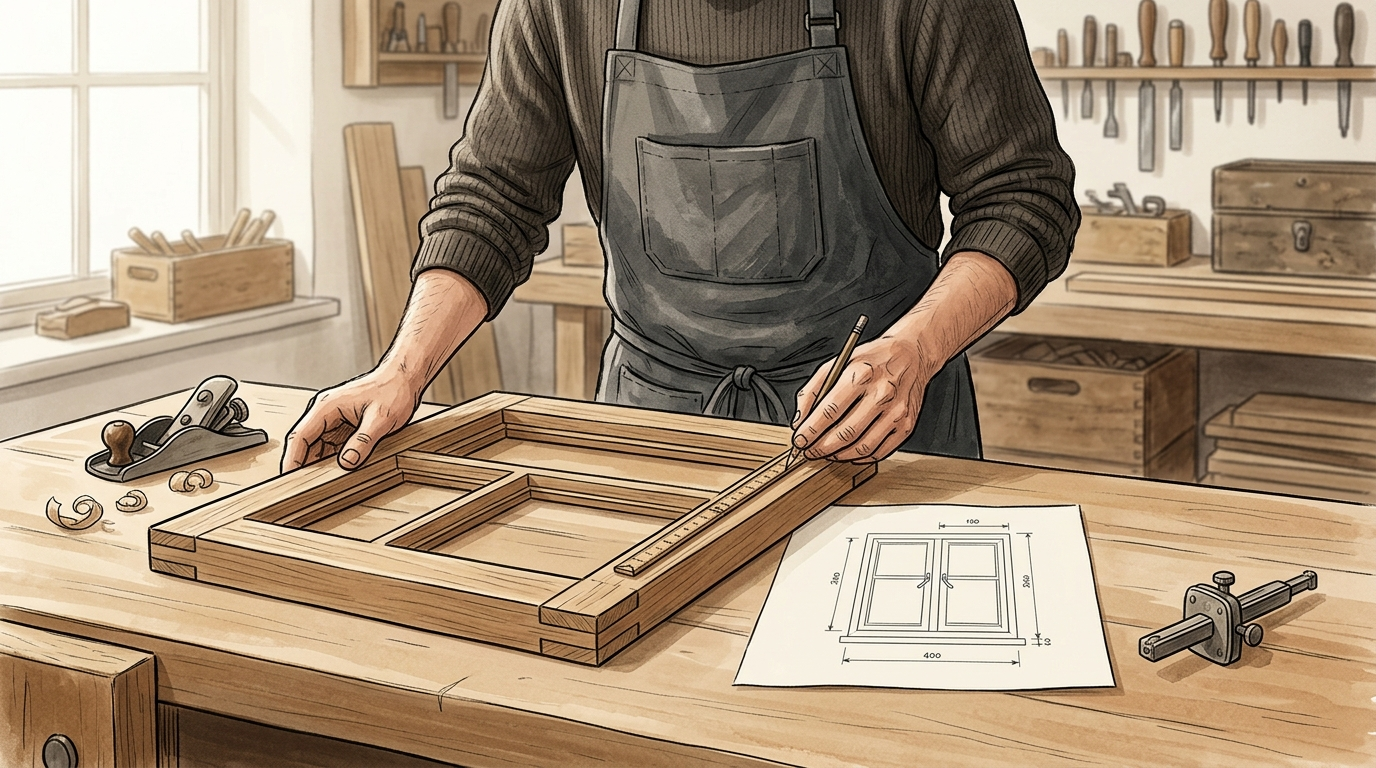
A joiner is a skilled tradesperson who makes timber components such as windows, doors and fitted furniture. Joinery often involves workshop manufacture followed by fitting on site, although the roles of joiner and carpenter overlap. For a homeowner, the useful question is whether the company has experience of the particular work you need.
This guide focuses on choosing a specialist. For an overview of products, materials and what to include in a project brief, see our guide to what joinery includes.
What Does a Joiner Do?
A joiner measures, prepares and assembles timber components to an agreed design. The work can include cutting joints, forming mouldings, assembling frames, fitting hardware and preparing surfaces for finishing. Some joiners specialise in windows and doors; others concentrate on cabinetry or interior details.
A workshop provides space for specialist machinery and for checking components before delivery. Accurate dimensions, suitable materials and careful installation all matter. A well-made component still needs to fit the actual opening, which may be uneven or different from an early drawing.
Manufacture and fitting may be handled by the same team or by separate specialists. Ask who is responsible for each stage and who will deal with any adjustments after installation.
Joiner vs Carpenter: What Is the Difference?
Traditionally, bench joinery focuses on making components in a workshop, while site carpentry includes assembling and fitting timber work in a building. In practice, the names and skills overlap. The National Careers Service includes joiner and bench joiner among related job titles.
Site carpentry can include structural framing and floor work, as well as fitting doors, skirting and other finished components. A joinery business may also undertake installation, repairs and adjustments on site.
This distinction is not a quality ranking. A carpenter may make excellent fitted furniture on site, while a joinery company may manufacture it in a workshop. Compare the proposed design, materials, workmanship and scope rather than relying on the job title alone.
Which Joinery Specialist Do You Need?
Windows and doors
Look for experience of the construction you have or want: sash or casement windows, a replacement door leaf, or a complete door and frame. Ask whether the work includes glazing, hardware, finishing, installation and making good around the opening. Browse our timber windows and doors for the main product choices.
Fitted furniture
For cupboards, wardrobes and shelving, ask to see comparable layouts and details. A useful proposal identifies the materials used for the carcass, doors and drawers, together with the finish and hardware. Made-to-measure work may use solid timber, veneered panels, MDF or other furniture boards, depending on the design.
Matching existing details
If you need a moulding or panel to match existing work, provide photographs and, where available, a suitable sample or drawing. Ask how the match will be agreed. The achievable detail depends on the original profile, material, condition and manufacturing method.
What Skills Should You Look For?
Relevant skills include understanding timber movement, reading drawings, using machinery and hand tools accurately, assembling components and selecting compatible finishes. Site work also requires judgement about openings, fixings and the surrounding building.
Apprenticeships and college courses are common training routes. Qualifications can help demonstrate training, but relevant completed work and a clear explanation of the proposed method are also useful when assessing a particular project.
How to Choose a Joiner in London
- Ask where and how the work is made. Find out who manufactures it, what is made to your specification and who takes responsibility for installation. A company may use its own workshop or work with a manufacturing partner.
- Look for relevant completed work. A portfolio of wardrobes does not by itself demonstrate experience of repairing historic sash windows. Ask about work comparable to yours.
- Check references fairly. Trace reviews to their source where possible. Contact with previous clients depends on their consent; an anonymised project record can also be useful.
- Understand the quotation. An initial estimate may be possible from photographs or drawings. Agree who will verify final dimensions and site conditions before manufacture, and which assumptions could change the price.
- Get the scope in writing. Check materials, finish, glazing where relevant, installation, exclusions, payment stages and the process for approving changes.
Check the documentation for window replacement
Ask how applicable Building Regulations requirements will be addressed and what documents you will receive. FENSA is one route for eligible replacement window and door installations; it does not cover every glazing job. Verify any claimed registration. Planning permission and listed building consent are separate matters.
What to Send With Your Enquiry
Start with your postcode, photographs, the type and number of items, and a short explanation of what you want to change. Approximate dimensions can help an initial discussion, but they should not be treated as final manufacturing sizes. Mention access restrictions, a target programme and any known heritage designation.
Planning timber windows, doors or fitted furniture for your London home? Explore AMB Joinery’s services, then tell us about your project so we can discuss the next step.

