
FINEO Vacuum Glazing for Sash Windows
An overview of FINEO vacuum glazing, the difference between glass and whole-window performance, and the checks needed before a heritage-window upgrade.
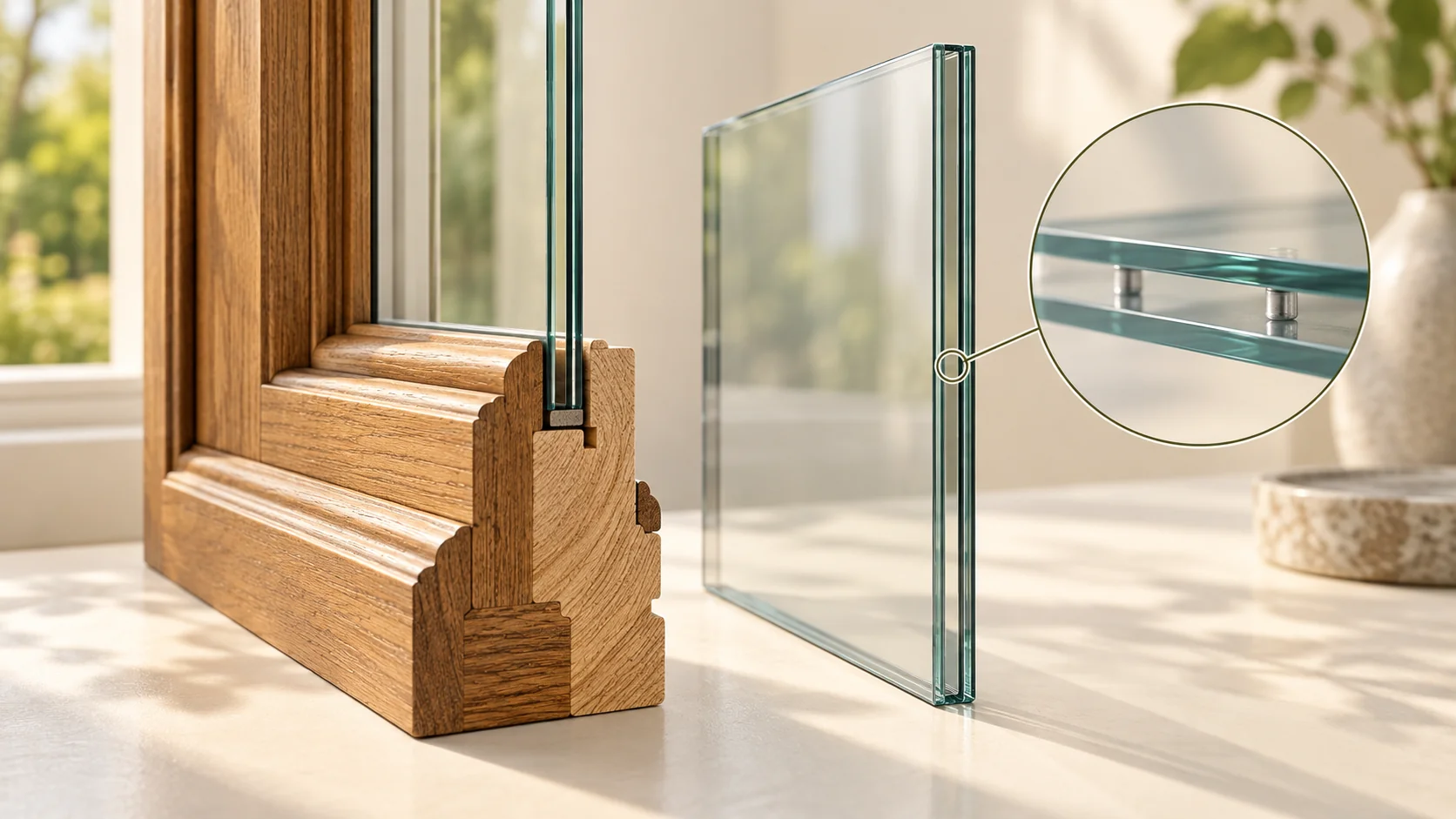
FINEO is a branded vacuum insulating glass range from AGC. It is one possible product to investigate when a timber sash window has limited space for a conventional insulating glass unit.
This article explains the product and the questions to ask. It does not confirm that AMB Joinery supplies a particular FINEO variant. Ask the team to identify the exact brand and specification available for your project before ordering.
How Vacuum Insulating Glass Works
Vacuum insulating glass has two panes separated by a narrow evacuated space, with small support pillars and an edge seal. Reducing gas in the space limits heat transfer through it. Coatings and the full construction also influence performance.
The technology should not be described as having no cavity, or as automatically fitting any old sash. The glazing unit still needs sufficient thickness, edge cover and an appropriate installation detail.
Check the Exact FINEO Product
AGC lists several FINEO variants, including acoustic, safety and heritage products. Thickness and performance depend on the version. Use the current datasheet and Declaration of Performance for the proposed construction rather than a single figure applied to the entire range.
The manufacturer advertises a glazing thermal coefficient of 0.7 W/m²K for FINEO. A glazing value is not the same as the Uw value of the complete window: the frame, edges and dimensions affect that calculation.
Can the Original Sashes Be Retained?
An inspection should record the rebate, glazing bars, timber condition, existing glass and sash dimensions. Check the manufacturer’s requirements for edge cover, glazing materials, support and drainage.
Small pillars and edge details may be visible depending on the product and viewing conditions. Ask to see a sample instead of relying on a claim that the glass is invisible. Keeping the box frame does not necessarily mean every sash, bead or historic pane can be retained.
Check weight and balancing too. A thin unit can still weigh more than the existing single pane.
Listed Buildings and Conservation Areas
A slim product does not establish that work is permitted. Historic glass and joinery may contribute to the significance of a building. Establish the permissions and acceptable details with the relevant authority before removing them.
Include photographs, section drawings and the proposed glass specification in the discussion. Do not assume that one approval elsewhere applies to your home.
What About Noise?
Compare the acoustic data for the exact product. Vacuum glazing should not be treated as universally better or worse than acoustic laminated glazing. The complete window, seals, ventilators and noise source also affect the result.
See our acoustic glazing guide if noise is a main concern.
Price, Warranty and Replacement
Ask for a quote identifying the product, sash work, balancing, installation and any approval-related work. Compare proposals with the same scope, rather than an isolated price per pane.
Get the applicable warranty in writing, including conditions, exclusions and responsibility for a replacement unit. Do not assume that a manufacturer’s product warranty also covers all installation work.
Discuss a Glazing Upgrade
Send photographs, approximate dimensions and your property’s listing or conservation-area status. Tell AMB Joinery whether heat loss, noise or preserving existing details is your main concern, and ask which products can actually be supplied.
Explore glazing upgrades or contact AMB Joinery.
Further Reading
AGC’s FINEO product information and Historic England’s window guidance.

