
Does Triple Glazing Reduce Noise?
Pane count alone does not tell you how quiet a room will be. Compare tested glass constructions, window seals and the noise source before choosing a sash-window upgrade.
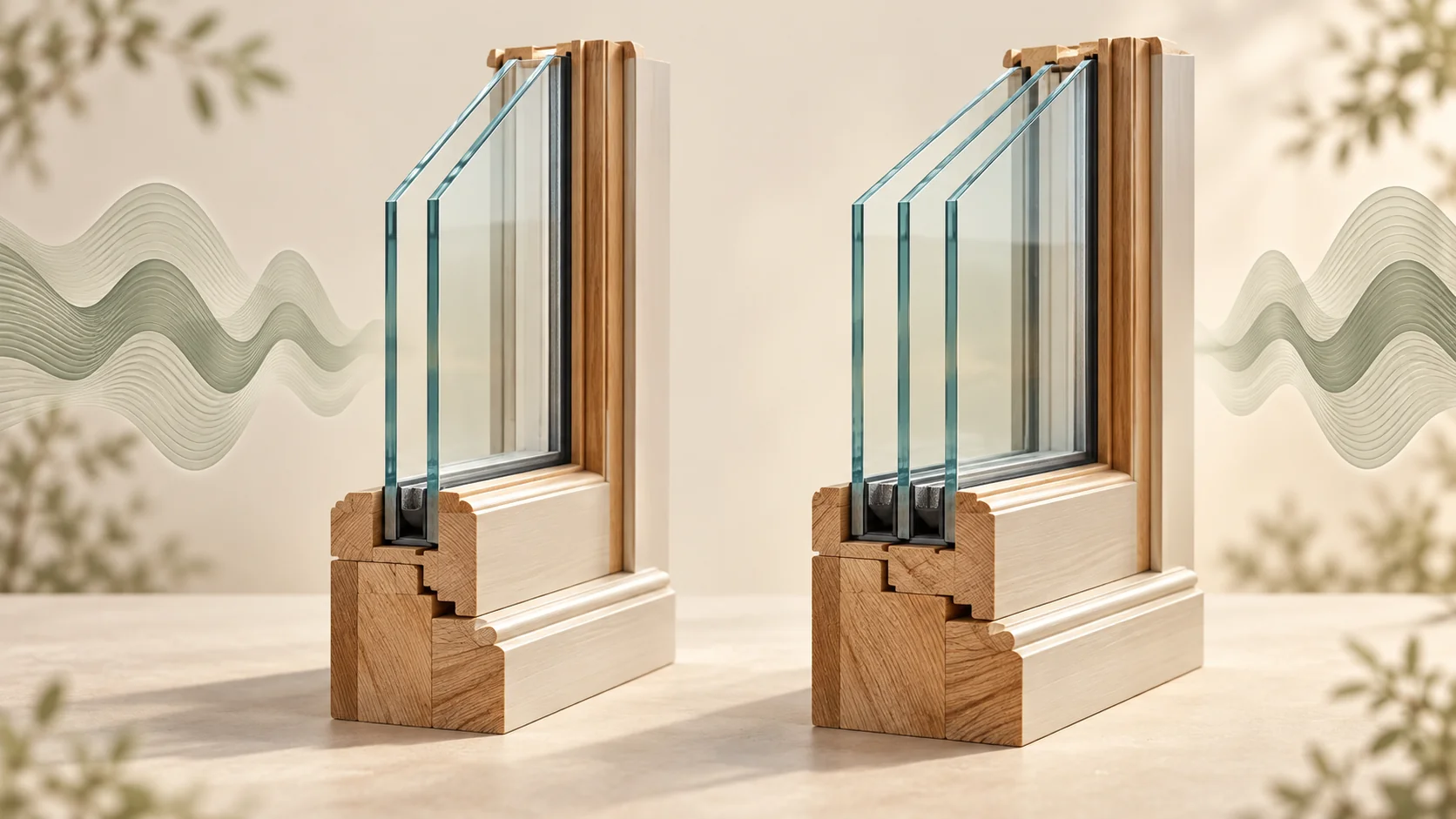
Triple glazing can reduce sound transmission, but it is not automatically quieter than double glazing. The useful comparison is between the exact tested constructions and the complete window proposed for your home.
For a London sash-window project, also establish where the noise enters. Gaps around the sashes, ventilators and other parts of the building may affect the result even when the glass performs well.
Why Pane Count Is Not Enough
Glass thickness, cavity sizes, pane combinations and any acoustic interlayer affect sound transmission. Different constructions respond differently across the sound-frequency range. Adding a pane does not by itself demonstrate a better result against your particular noise source.
Acoustic laminated glass uses an interlayer designed to improve sound insulation. It can be incorporated in different glazing arrangements; the label still needs supporting specification and test data.
Compare Evidence for the Proposed Construction
Ask for the glass make-up and its acoustic test report. Check whether a quoted figure describes the glass unit or a complete window assembly. A laboratory rating is not a promise that noise in your room will fall by the same number of decibels.
Rw summarises laboratory sound insulation. Spectrum adaptation terms such as C and Ctr help interpret performance against different noise spectra. Compare equivalent data and ask which metric is relevant to the noise you experience.
Traffic, Aircraft and Railway Noise
Describe the source, when it occurs and which rooms are affected. Steady traffic, individual aircraft events and vibration can require different investigations. For a demanding project, an acoustic assessment can establish the target before products are selected.
Do not choose a specification solely from a generic claim such as “40 dB reduction”. Ask what was tested, under what conditions, and how it relates to your window.
Will It Fit an Existing Timber Sash?
Measure the glazing rebate and inspect the timber before choosing either double or triple glazing. Thickness, edge cover, glazing bars, beads, drainage and installation requirements all matter. A slim product description does not guarantee an unchanged sash.
Additional glass weight can affect cords, weights, pulleys or spring balances. The proposal should explain whether existing sashes can be retained, whether new sashes are needed and how the balance will be adjusted.
Seals and Ventilation Matter Too
Check the meeting rail, perimeter seals and installation junctions. A glass upgrade cannot correct every sound pathway. Ventilation should be included in the proposal so that closing gaps does not create an inadequate ventilation arrangement.
Where appropriate, a specialist may also compare secondary glazing or other measures. Confirm what AMB can supply for your project rather than assuming every system is offered.
Heritage and Permissions
For a listed building or a property with additional planning controls, establish the requirements before changing glass or timber details. Acoustic glass is not automatically approved because it looks similar from the street.
What a Useful Quote Should Include
- The exact glass construction and overall thickness.
- Relevant acoustic data and what was tested.
- Any sash replacement, repairs and balancing.
- Seal and ventilation details.
- Permission requirements and the limits of the expected outcome.
Read our acoustic glazing guide, explore glazing upgrades or tell AMB Joinery about your window and noise concerns.
Further Reading
Pilkington’s guidance on sound insulation.

